
How to Style a Curated Vintage Dining Room
Creating a curated vintage dining room is all about the intentional blend of unique auction treasures and fresh, modern updates. In this post, I am sharing how to use vintage furniture inspiration and estate sale finds to create a space that feels gathered over time rather than assembled in a single weekend. From furniture selection to final DIY projects, you will see how easy it is to bring timeless character and an intentional, collected look to your own home
The following post may contain affiliate links. That means if you click and then buy something, I will make a small commission at no additional cost to you! Thank you for supporting my blog. full disclosure here.
What Makes a Dining Room Feel Curated (Not Cluttered)
A curated vintage dining room is one that feels collected over time. Without some intention and editing, it can quickly look like a thrift store haul—which is not desirable by any means! We also don’t want to create a vendor booth look, either.
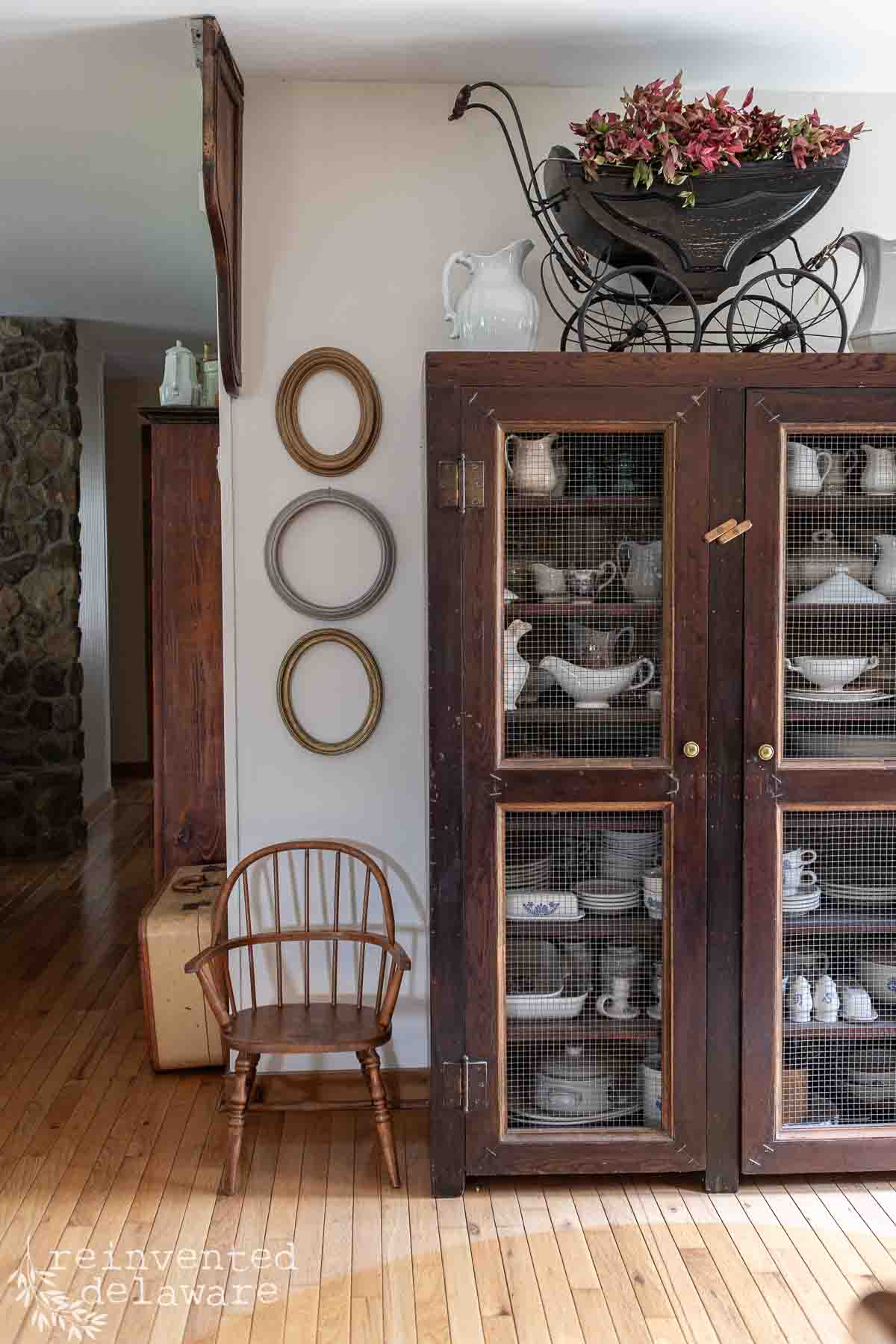
One way to avoid the cluttered look is to build defined collections. For instance, I collect ironstone—not only to use as my everyday dishes, but also to decorate my home. It’s fun to search for and find the individual pieces that add to my ironstone collection, and when those pieces come together in a room, they make a statement that feels intentional rather than overwhelming.
Shopping for a collection means you have to shift your mindset. It’s tempting to purchase every piece of secondhand dining room decor you love the moment you spot it at the thrift store! But shopping with intention—asking yourself whether a piece fits your collection or your color palette before you buy—is what creates the curated look.
One more thing to consider when avoiding a cluttered look: editing. Step back and look at the room as a whole, then break it down section by section into vignettes. Try removing pieces that don’t quite fit the spot. Too much of a good thing isn’t always good—vintage pieces can get lost in the mass. Paring down helps the remaining pieces get the attention they deserve.
Building Your Color Palette Around Vintage Tones
Creating a vintage-inspired color palette is my favorite part of the process. These colors have an old-world charm that feels inviting and welcoming. Tones such as warm neutrals, creamy whites, and earthy blues and greens tend to unite vintage pieces beautifully.
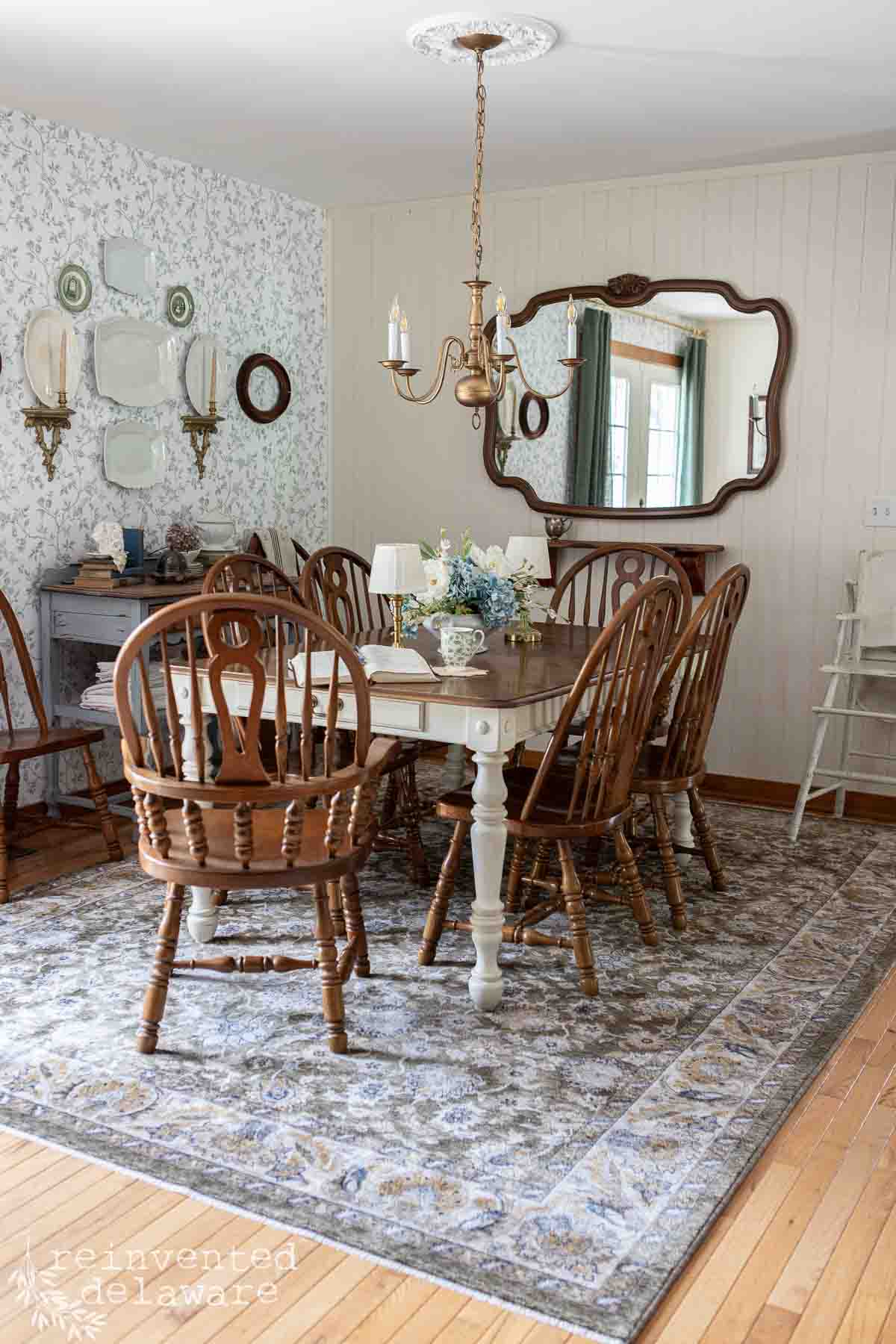
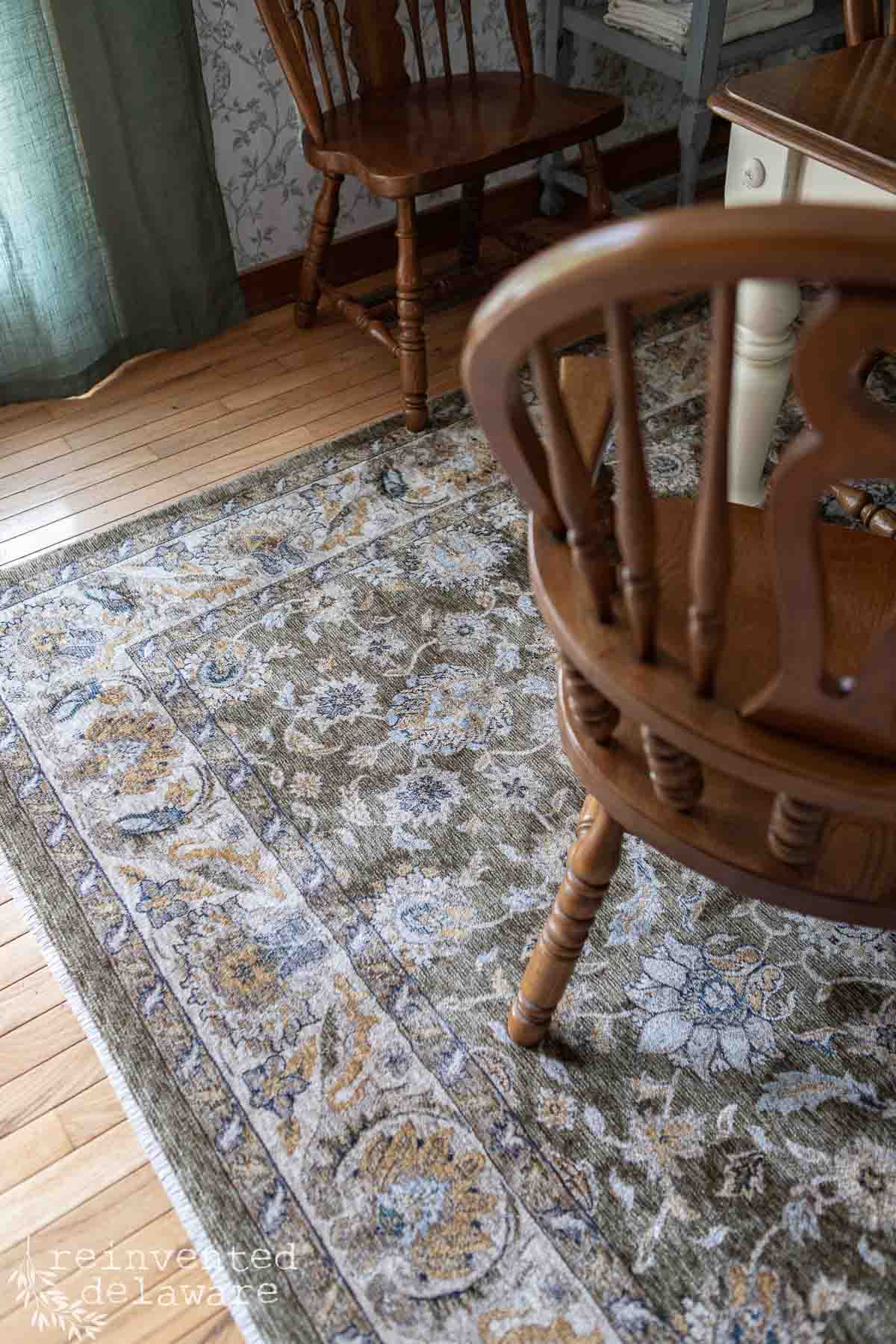
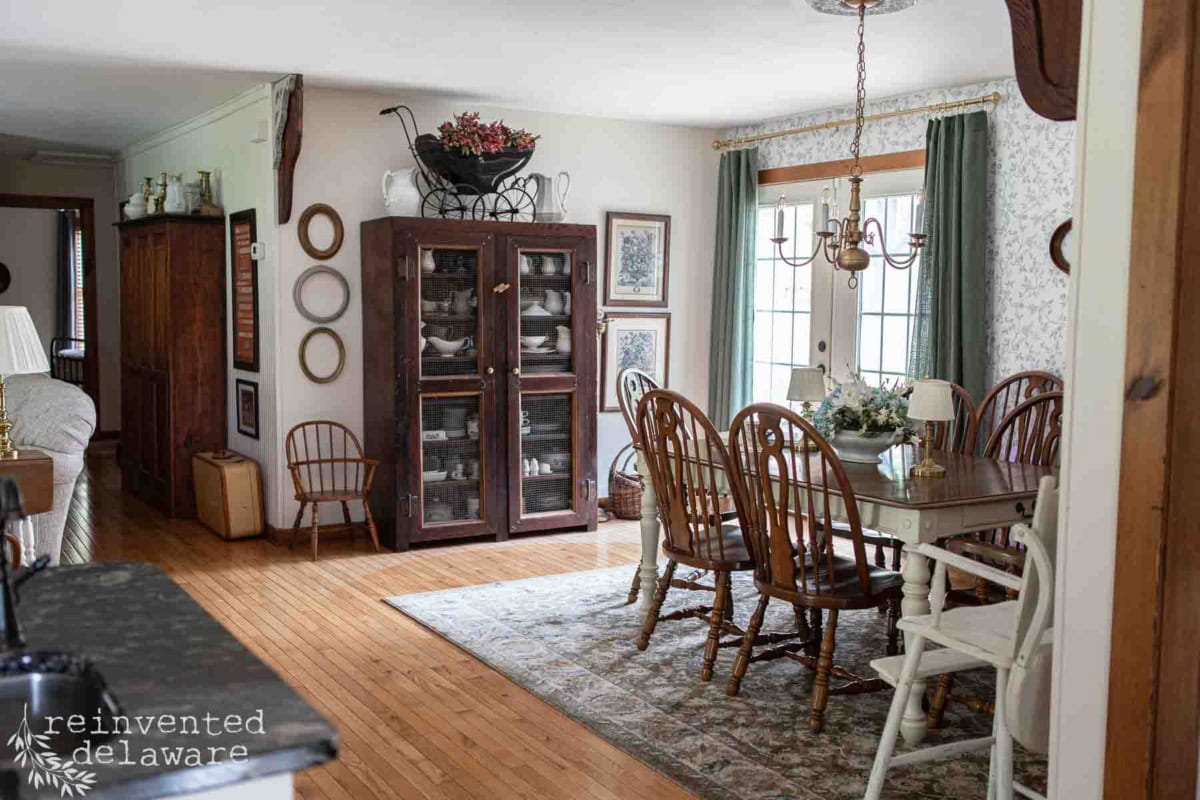
My color palette throughout my home is built around warm neutrals and earthy blues and greens. I actually carry several paint color swatches in those colors in my purse so I can reference them when I’m shopping at thrift stores or choosing new items—like the vintage-inspired rug I found for my dining room. That rug alone is an anchoring piece that sets the entire tone for the space.
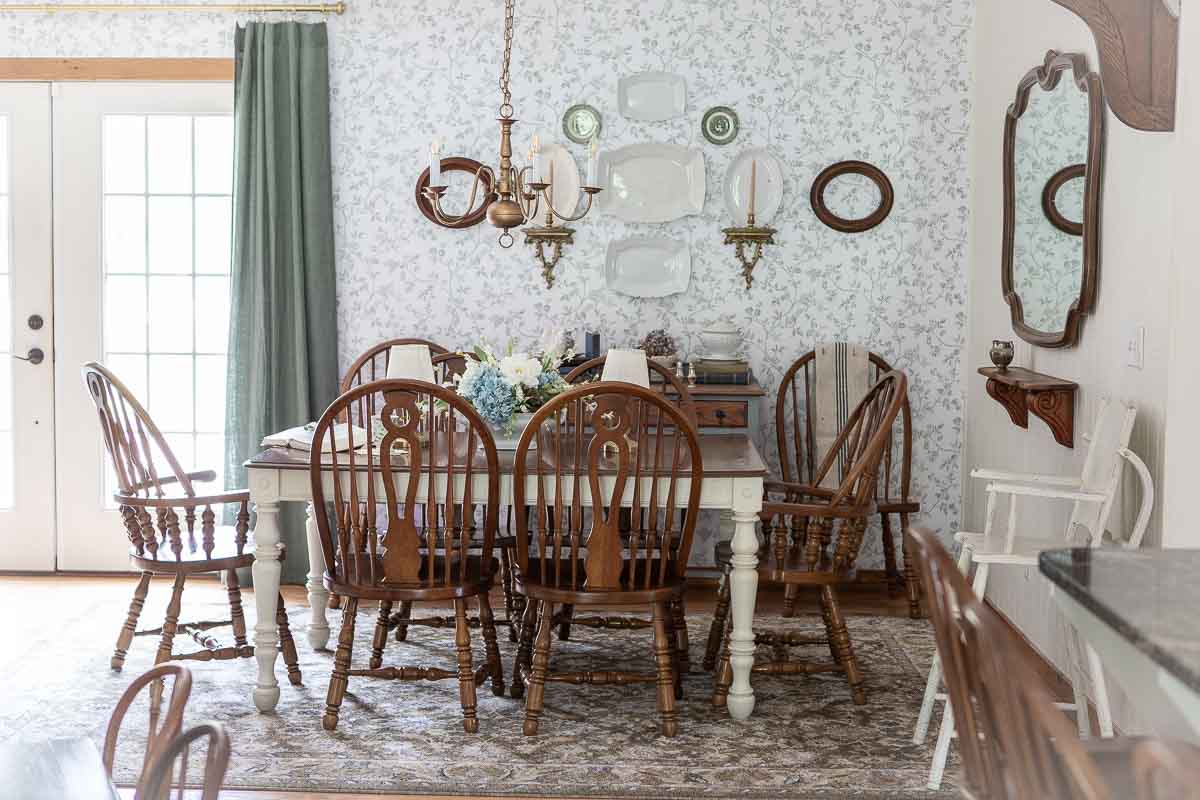
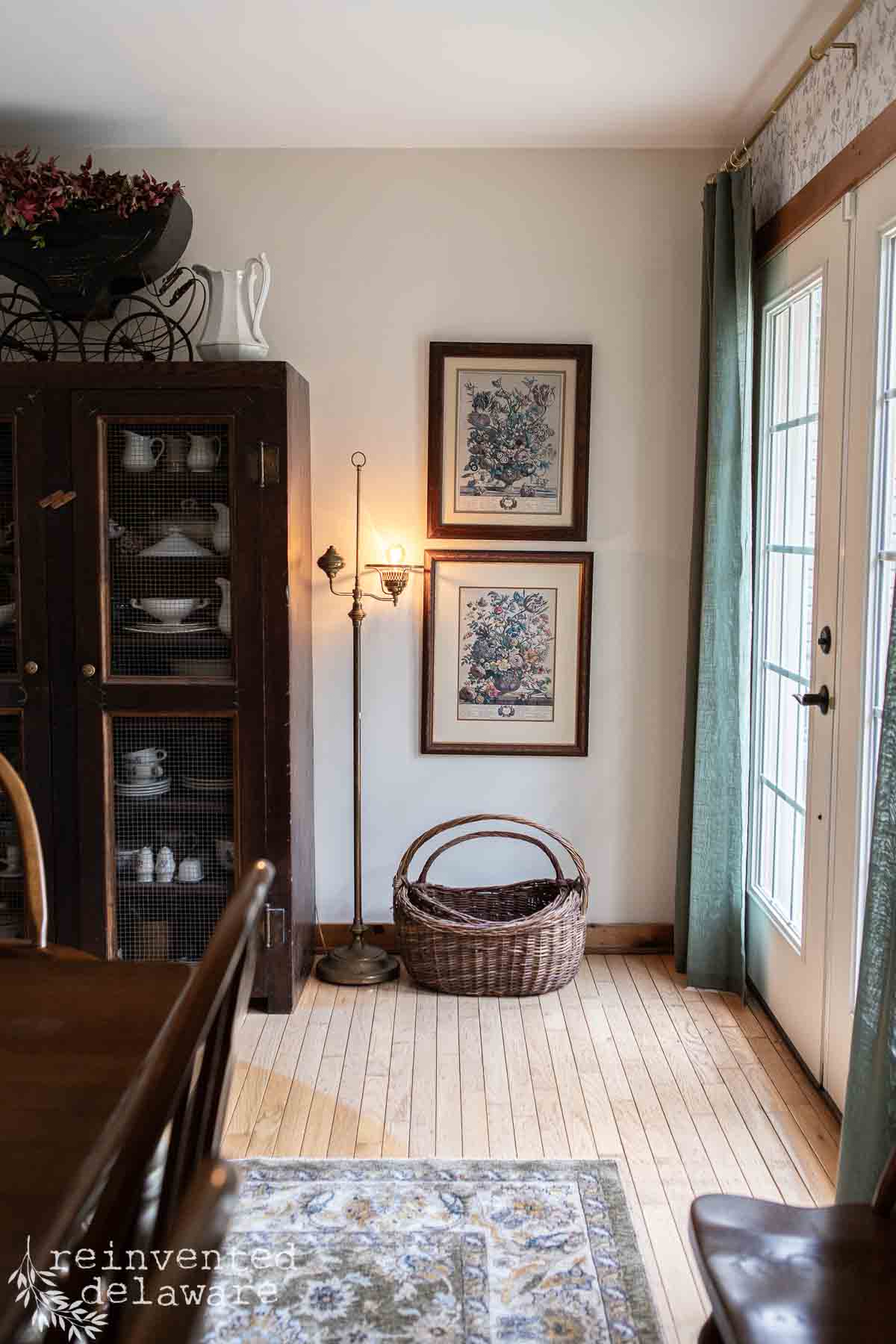
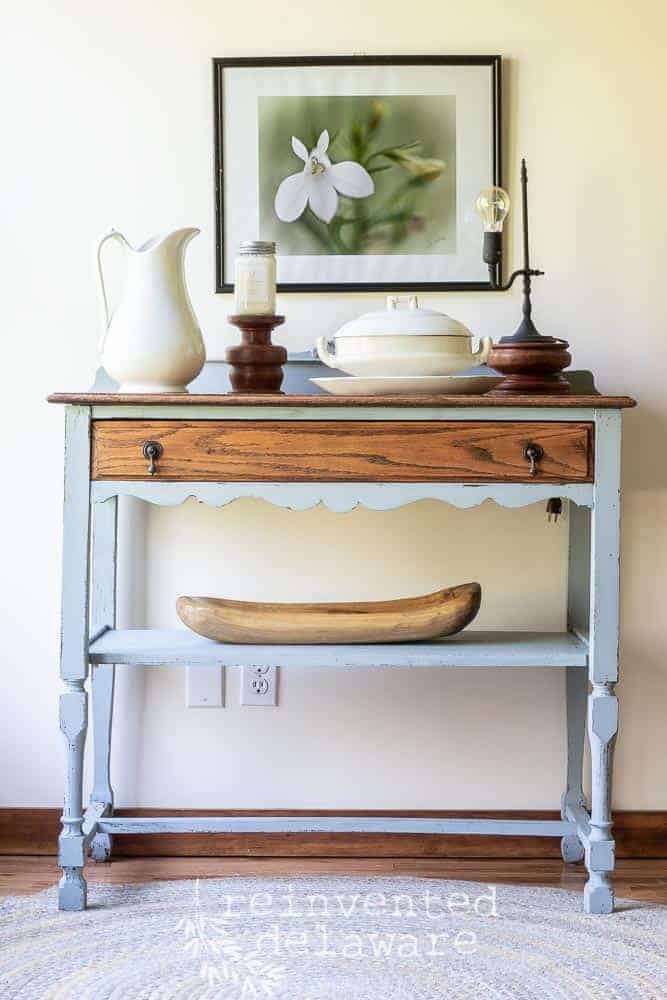
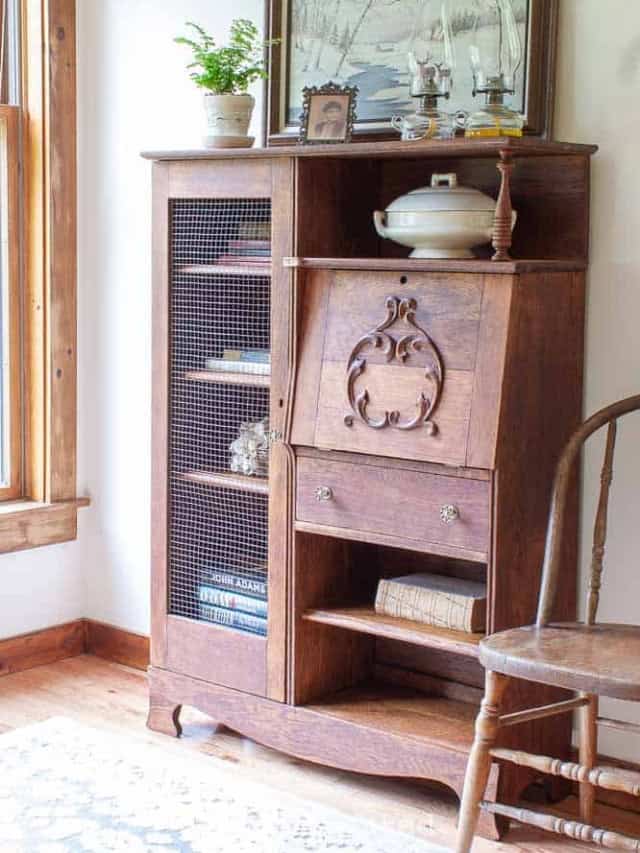
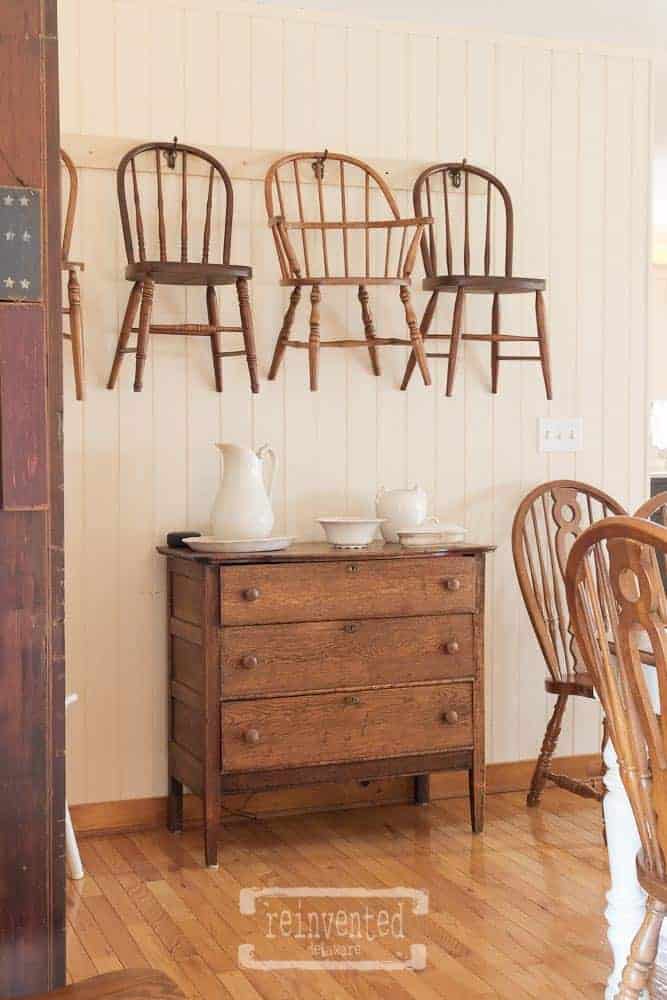
The natural warm wood tones of the vintage dining table help to ground the room, and the texture and color of the tall storage cabinet add warmth that newer furniture simply can’t replicate. These two iconic pieces, along with the antique sideboard, bring real character to this dining room.
Having a defined color palette also made the wallpaper decision so much easier. When you know your colors, you can spot the right choice immediately. And because I’m using these same tones throughout my home, I’m already collecting pieces for a vintage-inspired refresh of my living room next!
The Art of Mixing New and Vintage Pieces
Developing the skill of mixing vintage and new decor is so important in creating a curated space. The new pieces in my dining room are the 8×10 rug (in mainly green tones with touches of blue), the curtains, and the new gold-tone curtain rod. (Sadly, after several trips to the thrift store, I couldn’t find curtains I loved, so I ordered them online—and the old curtain rod was broken)
The rug was the most important new piece to add, and I searched high and low at thrift stores, Marketplace, and everywhere online before finally walking into my local Carpet Mart and sifting through hundreds of options until I found the perfect one. I’ve tried to track it down online since, but it’s nowhere to be found! I’ll link similar rugs from the same brand in case you’re searching for something comparable later in this post.
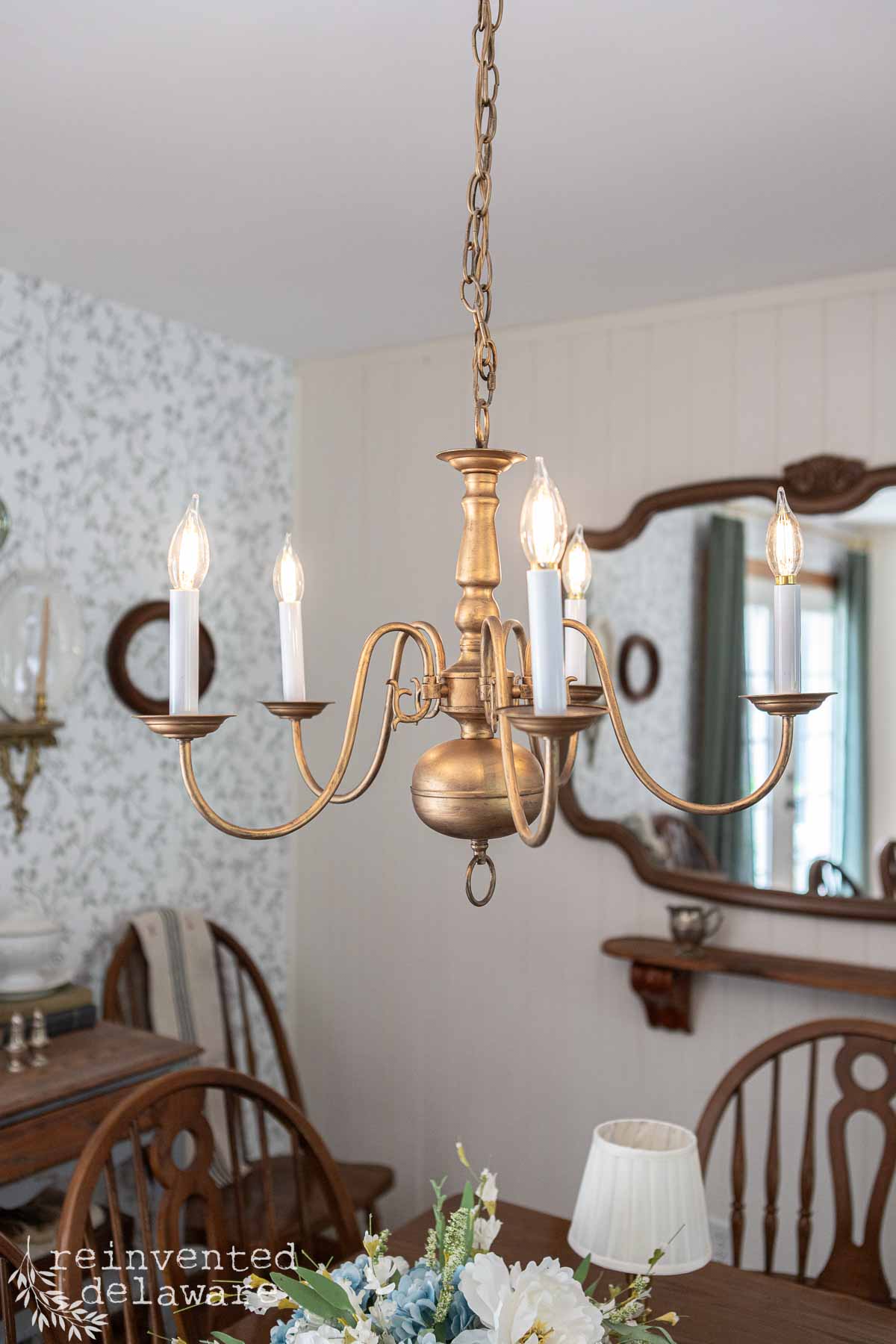
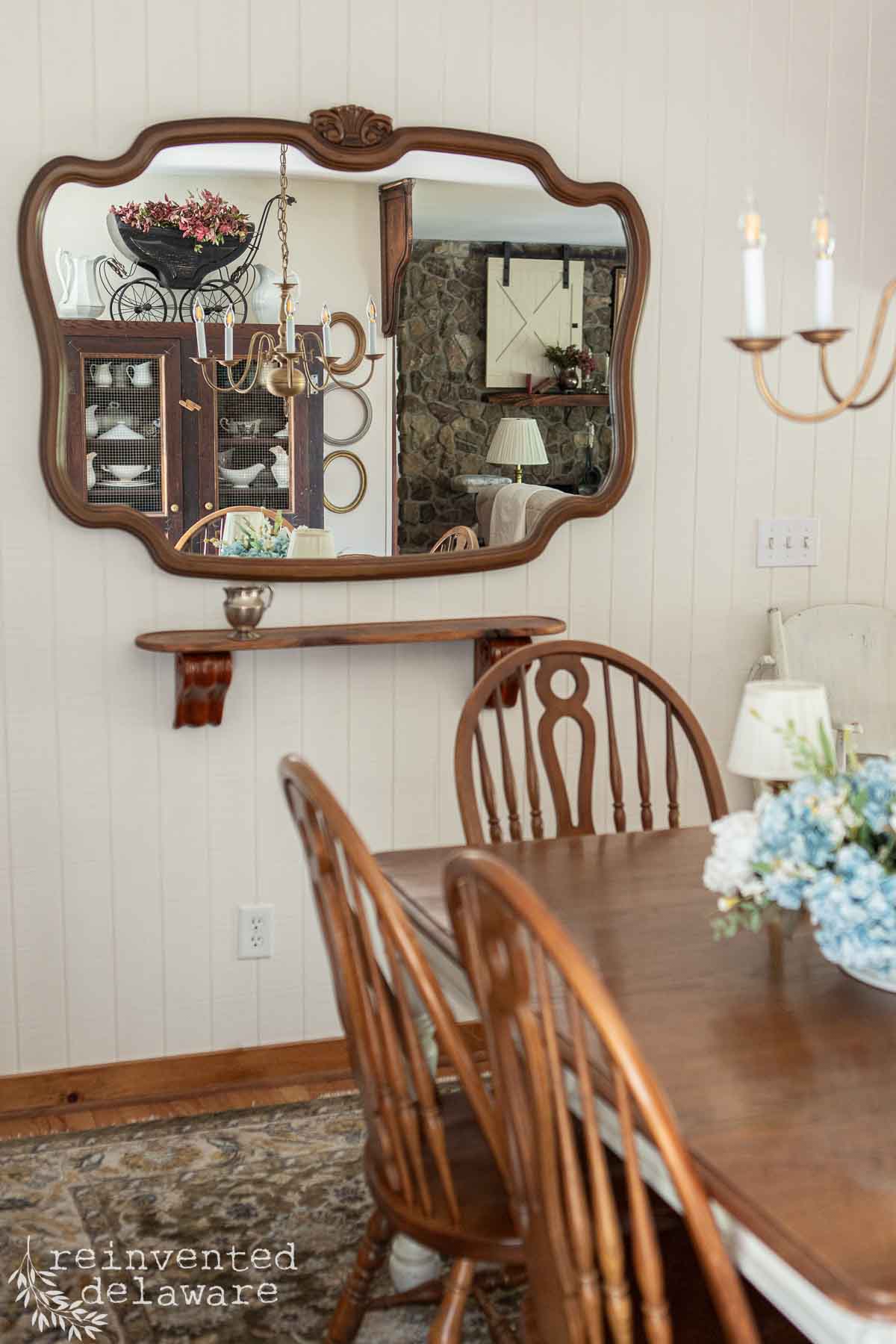
In design, there’s a principle known as the 70/30 rule: 70% foundation colors and 30% accent colors. I’d suggest using that as your starting point. In my dining room, the foundation is warm wood tones. You can see them in the tall storage cabinet, the dining table, the large mirror, and the flooring. The accent colors are earthy greens in the curtains and warm gold tones in the chandelier and various brass pieces throughout the room.
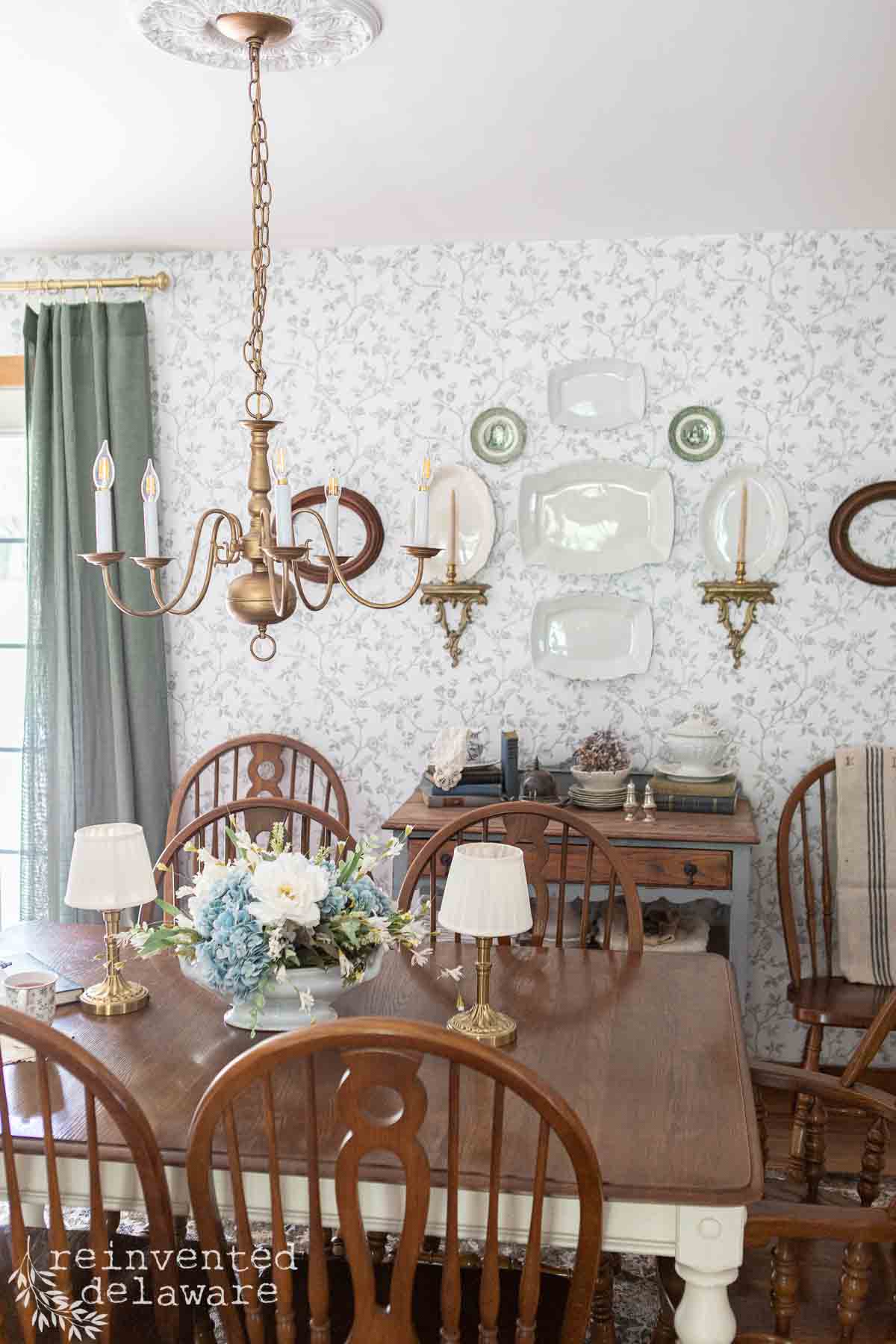
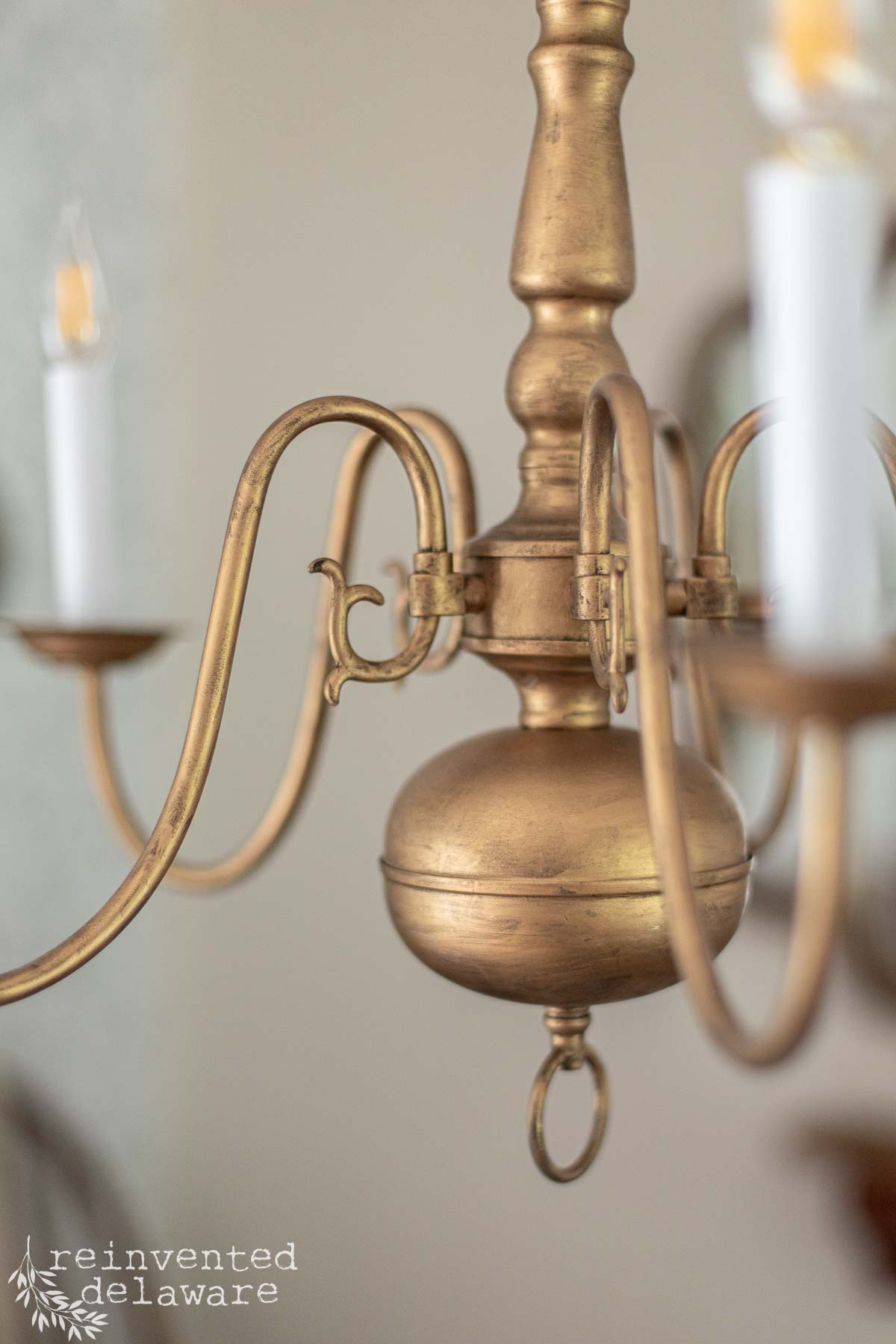
Speaking of the chandelier, this one is actually brand new. The price was amazing, but the color wasn’t my favorite since it had a faux brass finish. I used a simple technique to give it the look of aged brass instead. You can see that full makeover in the YouTube video linked below. If you can’t source an antique brass chandelier, this approach is a great option.
Common Mistakes to Avoid:
- Watch your eras. Try to stay in the same approximate time frame for your furniture and decor. Pairing a boxy, straight-lined modern buffet from the 1990s with a curved, detailed mirror from the 1950s, like the one I have, can look jarring. Keep in mind you can always give a piece, like framed art, a makeover to bring it into your era!
- Stay within the same color family. If you’re struggling with this, search Pinterest for terms like “vintage color palette,” “curated home color schemes,” or “historical home interior colors.” A color wheel is also a wonderful tool for finding colors that naturally work together.
- Don’t sacrifice comfort. If you find beautiful antique dining chairs that are painful to sit in for a full meal, skip using them for the table. Instead, use that gorgeous chair as an accent piece in a corner of the room where it won’t get daily use. Find dining room chairs that will be comfortable for you and your guests.
thanks for being here!
I hope you are enjoying this project! Let me know if you have any questions. Or leave me a comment to tell me about your project and ideas!
thanks, Cindy 😀

Sourcing Vintage Finds at Auctions and Estate Sales
Finding vintage and antique pieces is so much fun. I’m all about the hunt whether I’m at the thrift store, an estate sale, or the auction. My best advice? Find your local shopping spots and frequent them!
I often pop into my local Goodwill when I’m already stopping at Aldi next door. They’re side by side, so it’s a perfect excuse to browse. That’s actually how I found the gorgeous mirror in my dining room. I had just run into Aldi and decided to check the Goodwill on a whim. That beautiful mirror was sitting there waiting for me for only $20. I loaded it into my car and then went grocery shopping!
For larger pieces and more serious finds, I shop our local auction regularly. Getting familiar with a few auction houses in your area is one of the best things you can do. You’ll start to recognize quality quickly and know what pieces are worth competing for. Estate sales are another goldmine, especially for solid-wood furniture and vintage tableware. Sites like EstateSales.org let you search by zip code so you can find sales near you each weekend.
Check out yard sales in your area. This is a seasonal way to shop, most yard sales are held during the spring and fall seasons. Use the app called Yard Sale to find them locally.
Evaluating a Furniture Piece on the Spot:
- Weight: Solid hardwoods like oak, walnut, and mahogany are noticeably heavier than veneer or particleboard.
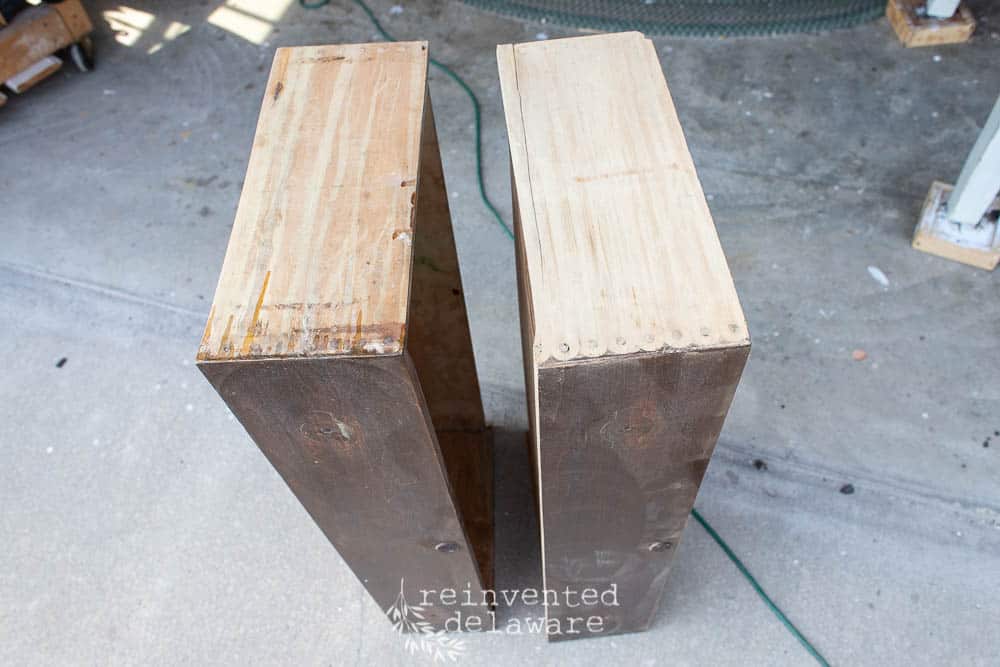
- Drawers: Open every one. They should slide smoothly, and the wood used inside (the secondary wood) tells you a lot about age and quality.
- Smell: A strong odor of smoke, mold, or pets is a red flag that can mean costly repairs. You may also consider giving those pieces a good scrubbing.
- Construction: Hand-cut dovetail joints in drawers are a sign of real craftsmanship.
- Tip: Set a firm budget before you walk into an auction and be emotionally ready to let a piece go if bidding goes past it. The right piece will come around again!
The DIY Projects That Tied It All Together
Sometimes the piece you really want simply isn’t showing up at estate sales or auctions and that’s where a good DIY comes in. For this dining room, two projects made a big difference in pulling the vintage look together.
The first was the chandelier. Purchasing a vintage or antique chandelier can be a real challenge and if you find one that needs rewiring, that adds cost and time. Instead, I found a $130 chandelier on Amazon that was the perfect size and could arrive in two days. The only issue was the faux brass finish, which felt too shiny and new.
The makeover was straightforward: I spray painted all the pieces flat black, carefully masking off any areas I didn’t want painted. Once dry, I applied Dixie Belle’s Gilding Wax in Antique Gold, a product similar to the popular Rub-n-Buff but a better value. Using a small artist’s brush, you simply dab into the wax and brush it onto the surface, letting some of the black paint show through for an aged, layered look. The result is a chandelier that looks like it came from an estate sale.
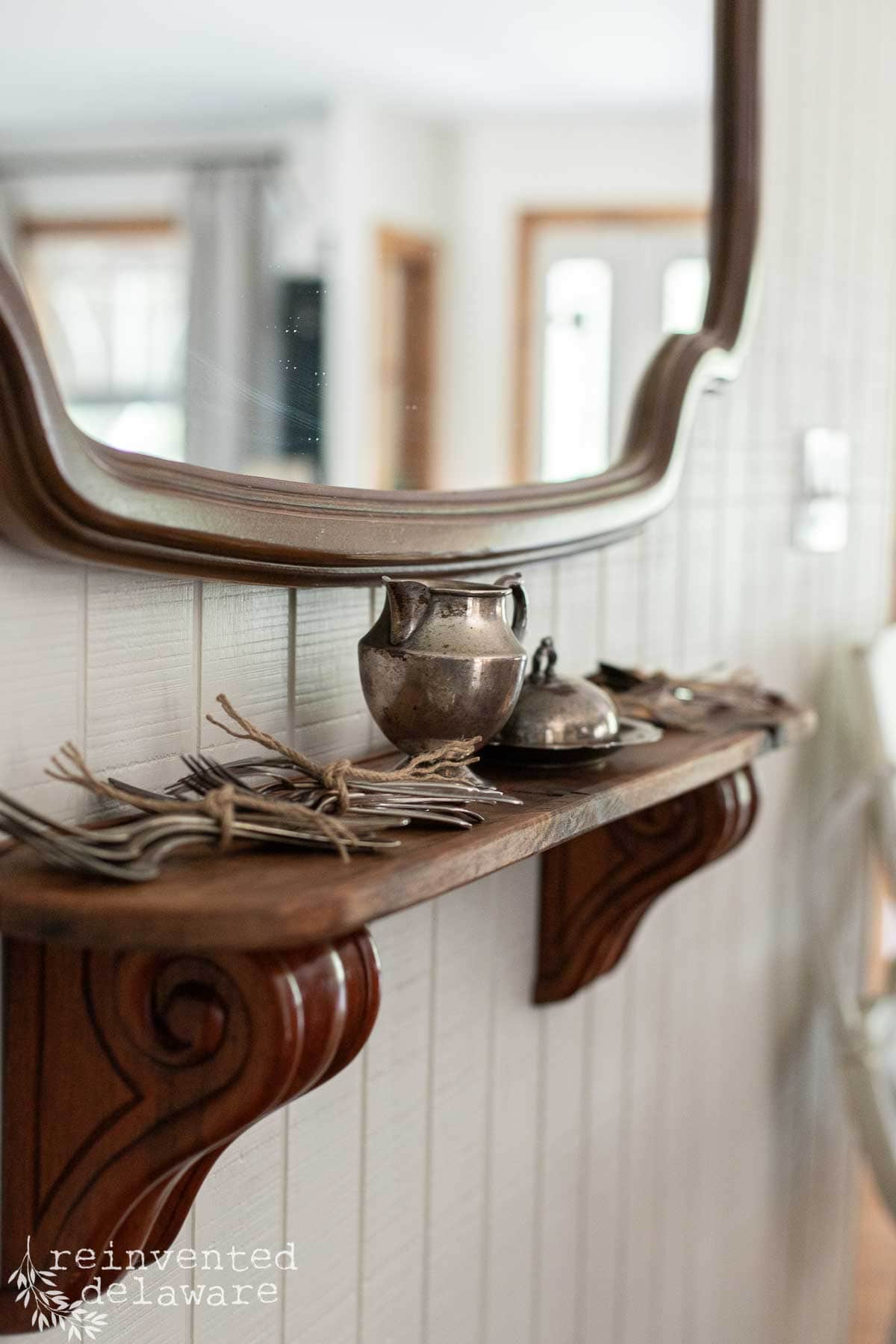
The second project was even simpler. I glued thrifted shelf brackets to a piece of wood, attached hangers to the back, and called it done. It’s inexpensive and adds exactly the custom character that a store-bought shelf never could. You’ll see the full details on both projects in the YouTube video linked below.
Styling Your Ironstone wall Collage
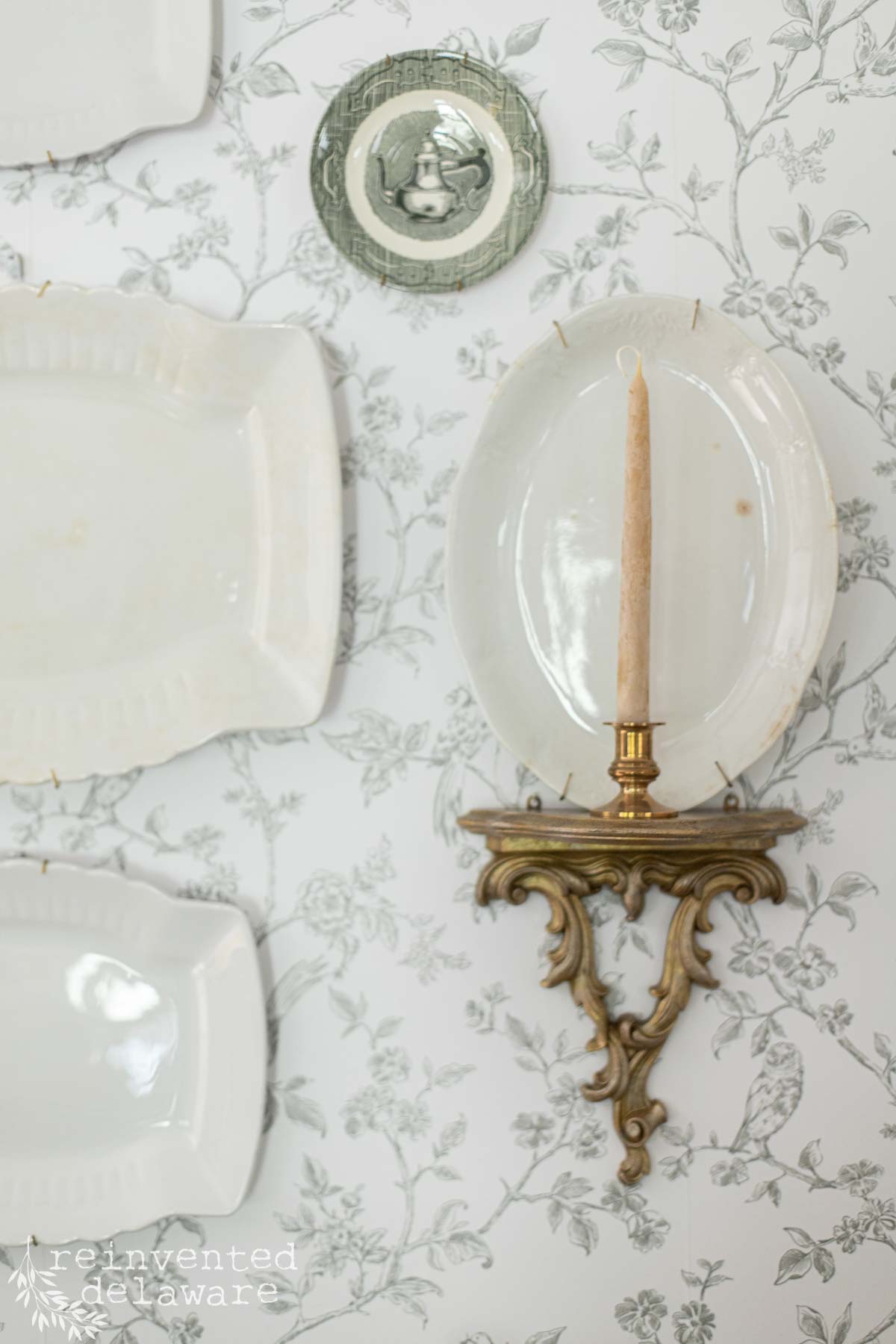
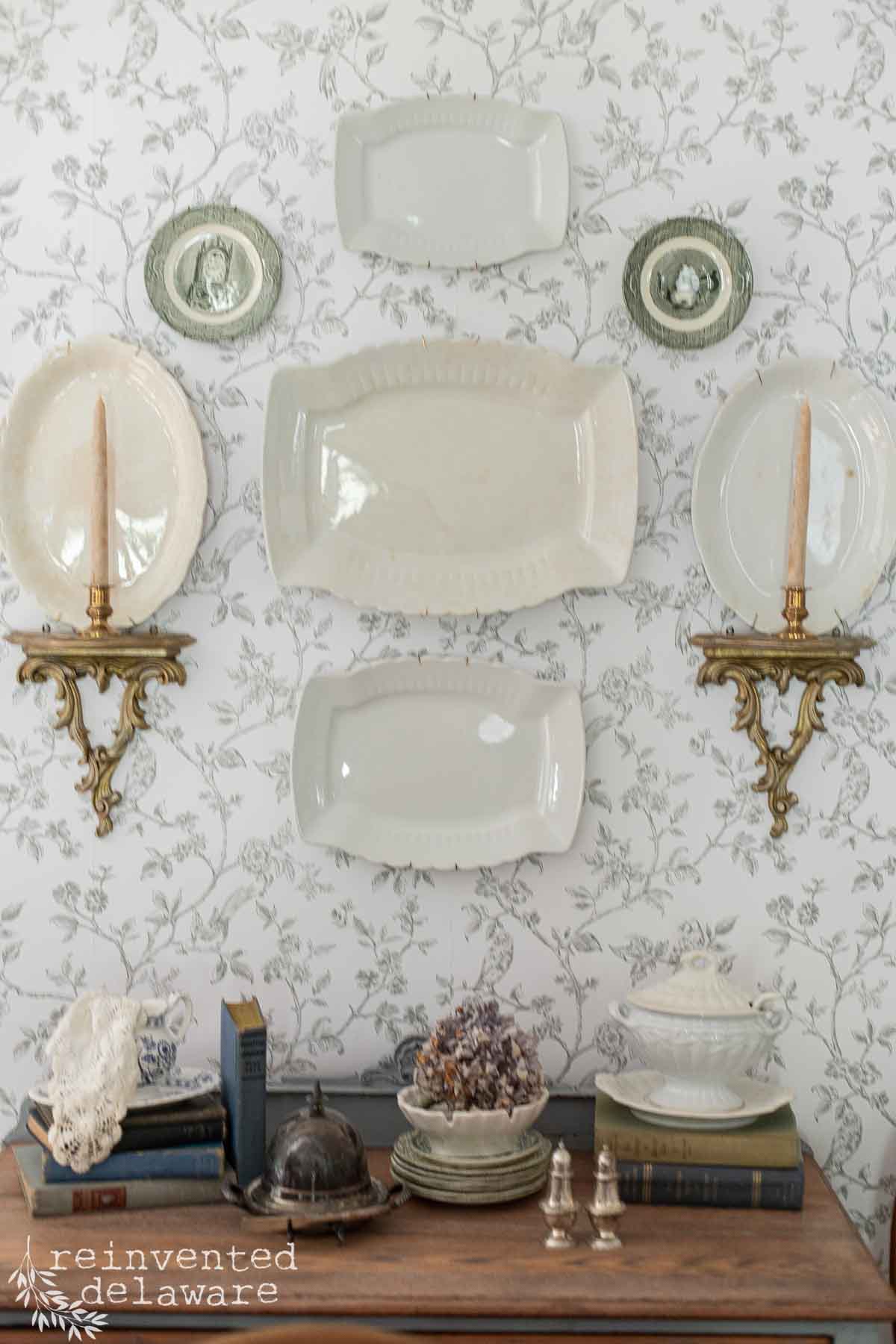
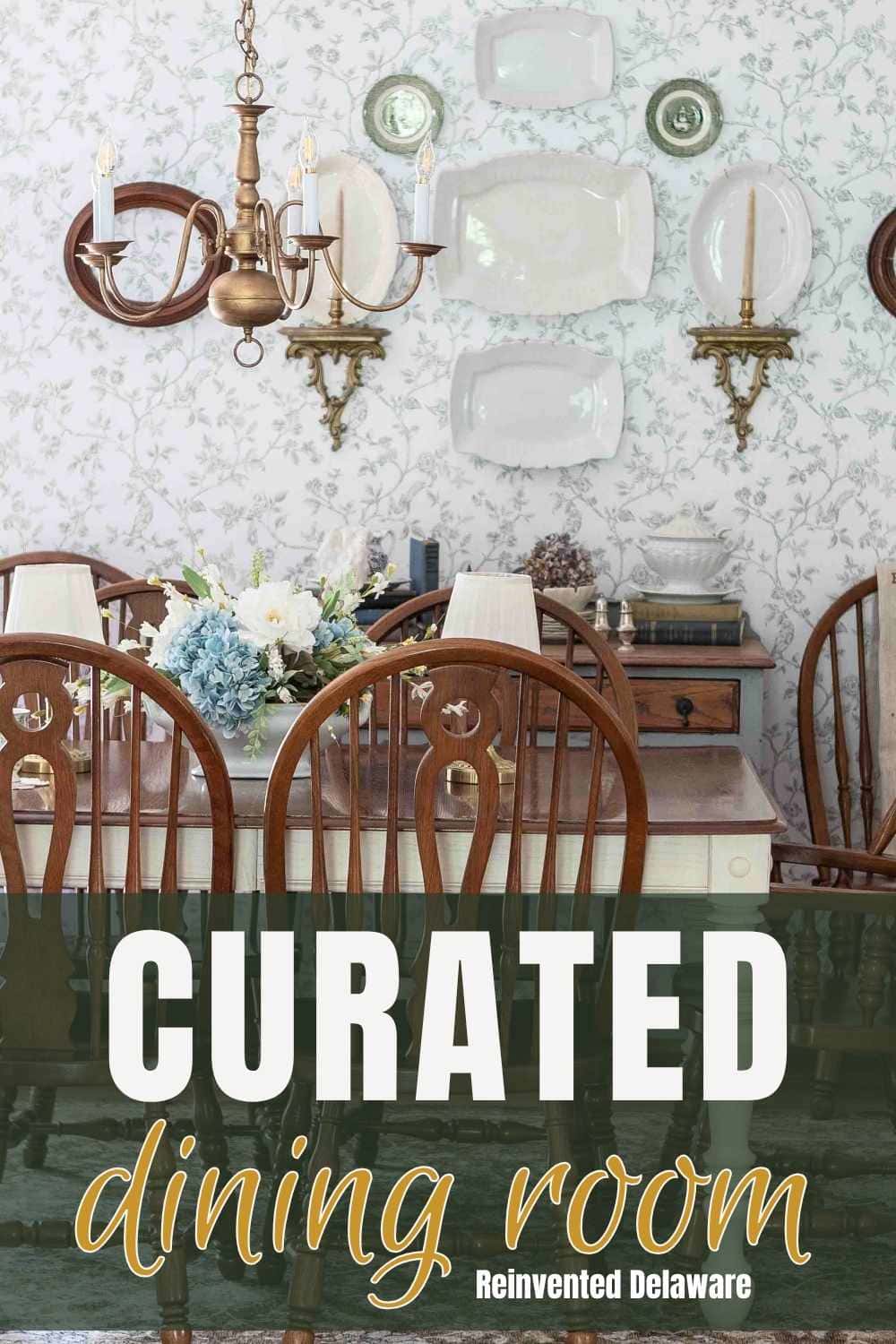
Styling vintage home decor is so much fun, especially when you’ve spent just a few dollars on the pieces! The antique ironstone platters on this wall were very inexpensive. Most cost me under $5. The large and medium scalloped-edge platters came from an antique store for $25 total, and the third, smaller scalloped platter was a thrift store find for just $3.
The scroll-shaped shelving brackets were completely free. I spotted them tucked away in the restroom of an antique store and asked if they were for sale. The owner said, “You can have them!” A quick makeover later, and they look stunning on the wall.
The collage is rounded out with oval frames that I have collected over the years. Another great option is to find framed “collector” plates at thrift stores, which are usually inexpensive. If you don’t want the plates, remove them and you’re left with beautifully shaped frames.
Vintage Tableware and Accessories
If you’ve followed along here for a while, you know that ironstone is my love language! I’ve been building my collection for years, picking up pieces one or two at a time. I look for classic white, good weight, and interesting shapes like scalloped edges and embossed details.
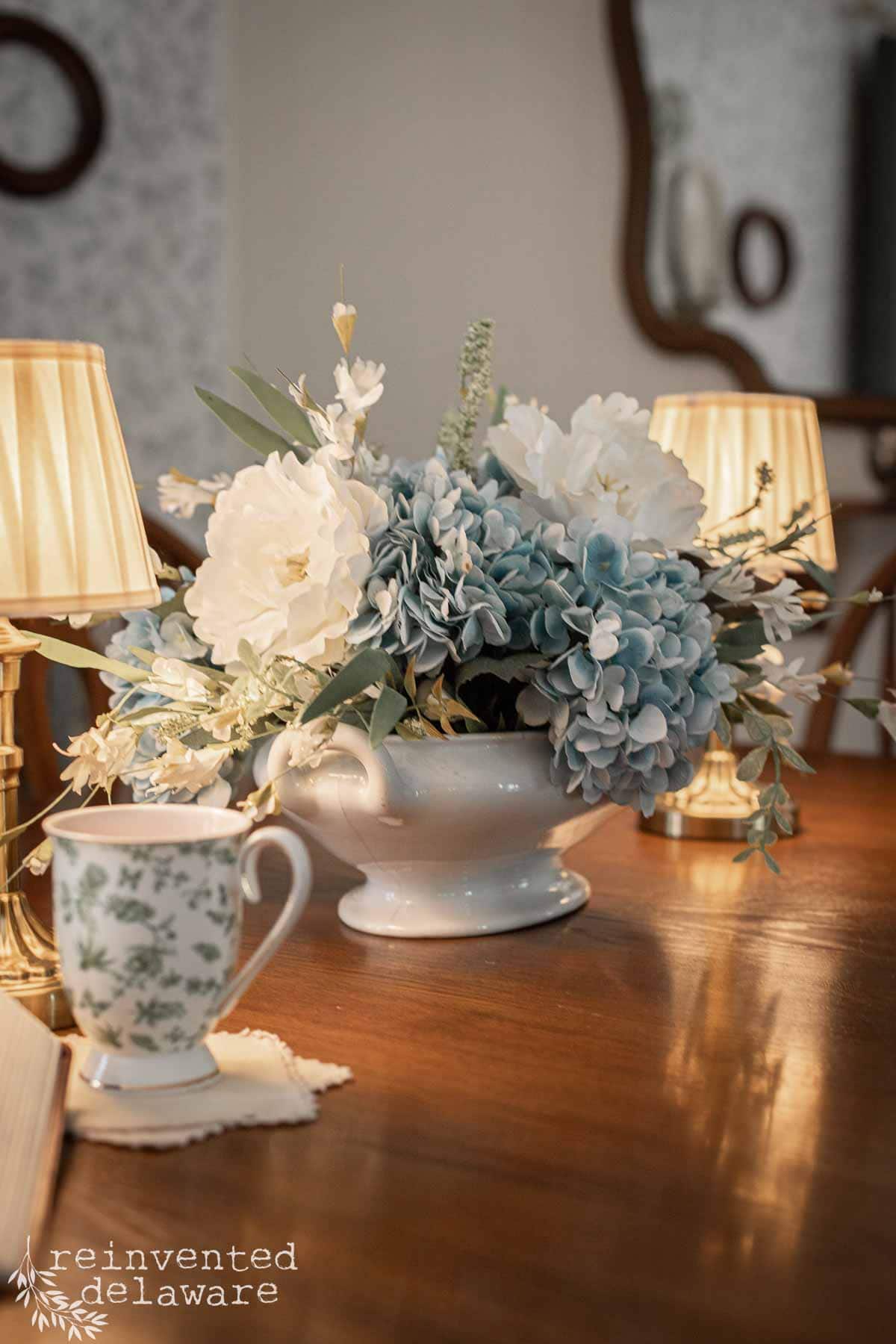
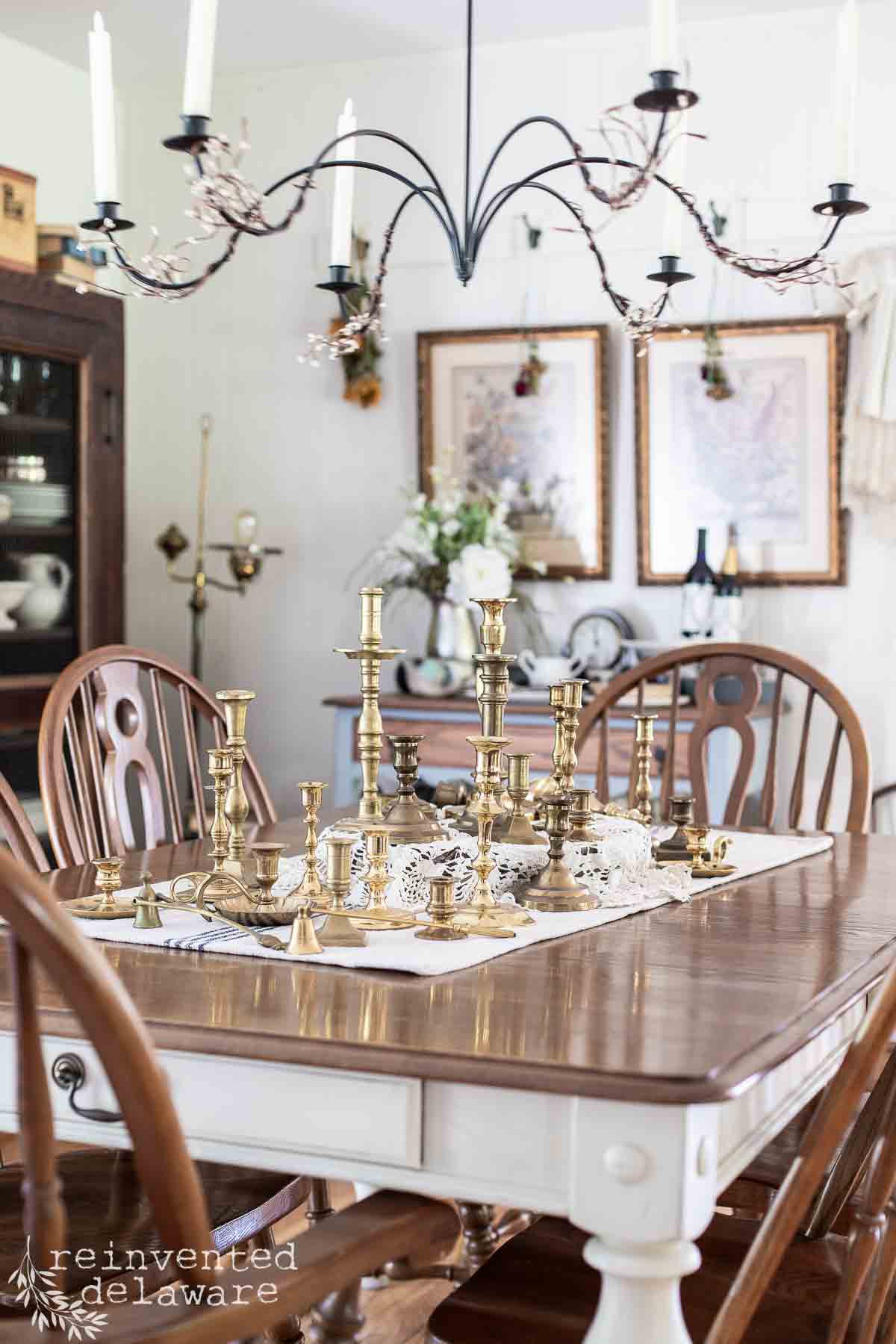
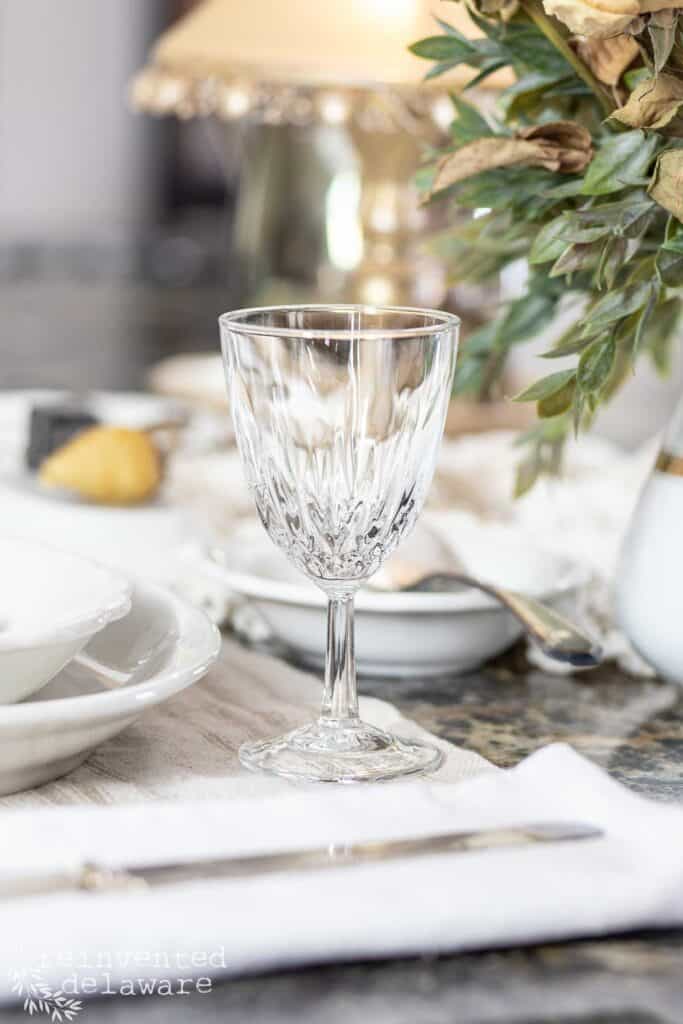
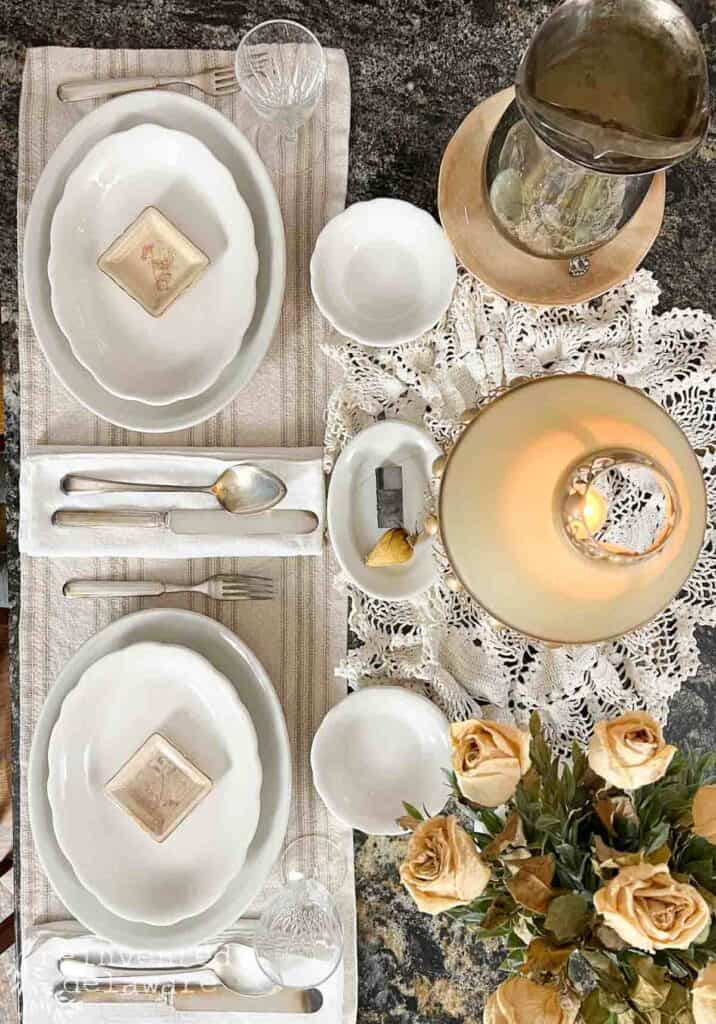
For everyday use, I keep the table simple: ironstone dishes, linen napkins, and maybe a soup tureen filled with faux flowers as a centerpiece. When company comes, I love layering in more details like a grain sack runner down the center of the table, mismatched vintage brass candlesticks, and large ironstone pitchers as a focal point. The mix of textures is what makes it feel warm and gathered rather than formal.
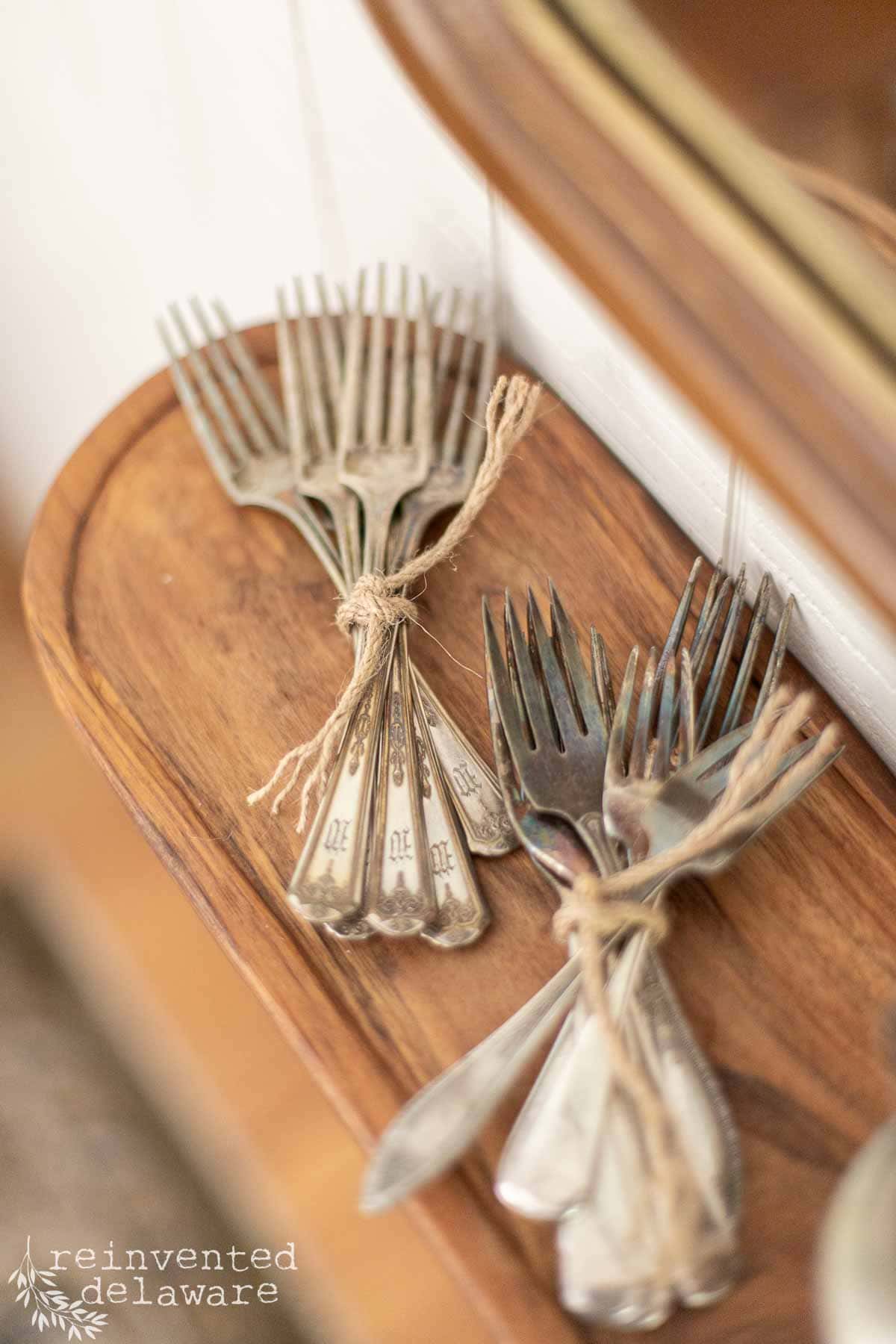
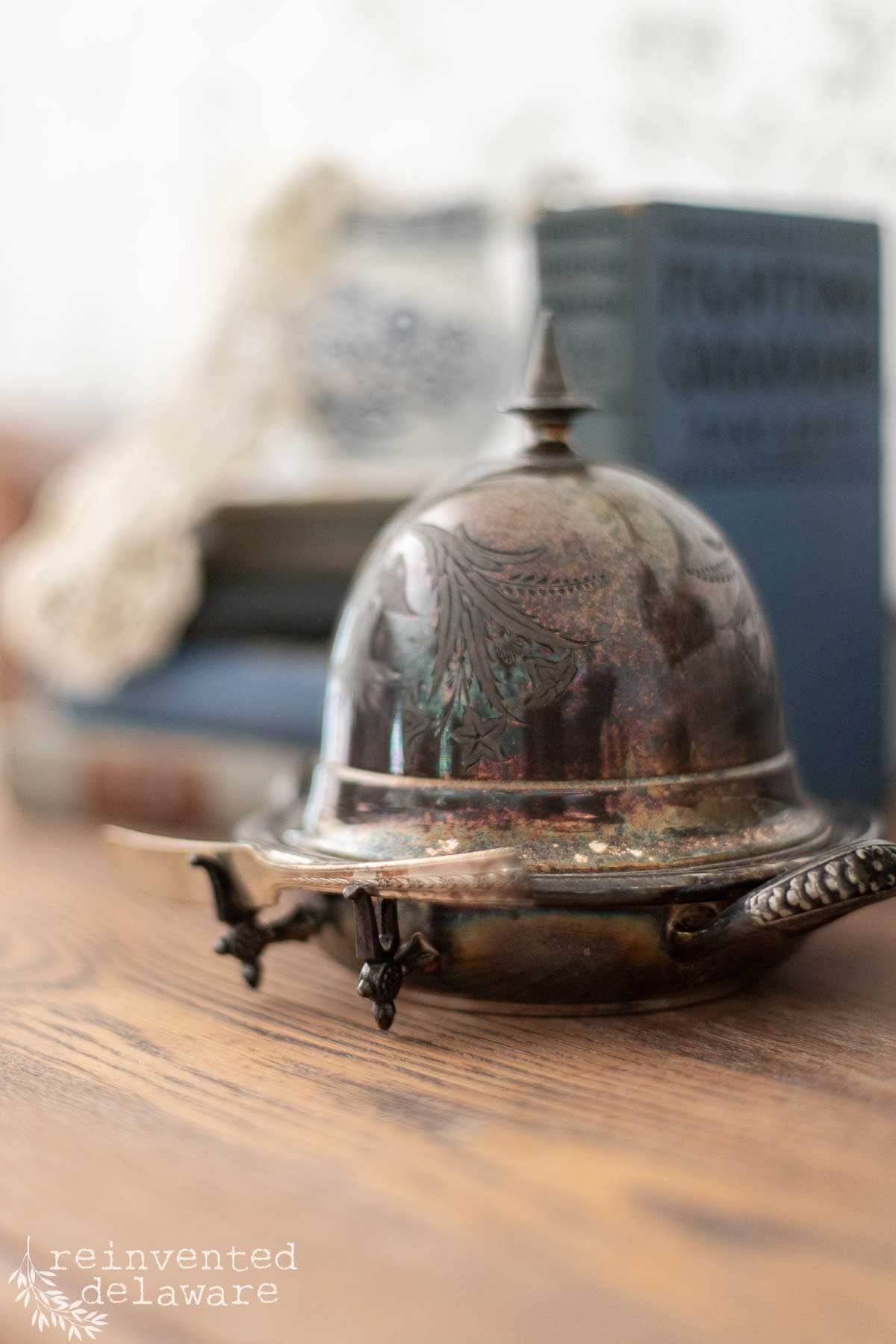
Beyond the ironstone, a few other accessories do a lot of work: the antique silver butter dish on the sideboard, silver flatware on the shelf, and vintage linens folded beneath the buffet. None of these cost much, but together they build that layered, collected feeling.
Lighting, Textiles, and the Final Layers
Once the furniture is in place, it’s the softer layers that make a room feel truly finished. Lighting, textiles, and small details are the difference between a room that photographs well and one that actually feels good to be in.
For lighting, the DIY chandelier is the star, but candlelight is the real secret weapon. A handful of taper candles in mismatched brass candle holders gives the room a warmth that no overhead light can replicate.
For textiles, I focused on natural fibers. The curtains anchor the windows and add softness, echoing the earthy greens in the rug to tie the room together. On the table, a simple linen cloth or grain sack runner is usually all I need, these add instant warmth and texture.
Don’t underestimate the small things: a basket of vintage linens, a cotton throw, or a bundle of dried botanicals. These details make a room feel lived-in and personal. That’s the whole goal of a curated vintage dining room, a space that looks like it has a history, because it does.
Frequently Asked Questions
A curated space feels gathered intentionally over time, mixing different styles, eras, and textures rather than looking like a matching furniture set bought on the same afternoon. The goal is for each piece in your furniture selection to feel chosen for a reason.
The key is a unifying thread, a consistent color palette, a repeated material, or a finish running through all of your pieces. In this dining room, warm wood tones and earthy neutrals like beige and cream run through every element. New purchases like the rug and curtains provided the neutral backdrop that lets the older auction finds and unique lighting fixtures take center stage.
Estate sales and local auctions are consistently the best sources for high-quality pieces with real character. If you are looking for vintage furniture inspiration, browsing these sales is a great way to see how well-made older pieces truly are. Thrift stores and Facebook Marketplace are also perfect for smaller accessories.
Not at all and in many cases, it’s more affordable than buying new. “Curated” sounds high-end, but it’s really about the quality of the hunt. Many of the most beautiful pieces in this room cost just a few dollars because vintage furniture is often undervalued relative to its incredible craftsmanship.
final thoughts on styling a curated dining room + Youtube video!
Wrapping up a room makeover is always such a good feeling, especially when it’s filled with pieces that have a story to tell. I hope this dining room refresh gives you the inspiration to skip the big-box showroom and start hunting for those unique auction and estate sale treasures instead.
Remember, a truly curated home isn’t created overnight, it’s built one intentional find at a time. I’d love to hear which part of this transformation was your favorite, so leave me a comment below and let’s keep the conversation going!
If you like watching room makeovers, then I know you will love this one! Tap below to watch my dining room makeover!
Acheive a Curated Dining Room
let’s transform my dining room!
Shopping links
Tap to shop for the products I used to create this beautiful dining room!

Recreate and Decorate
Join the Facebook Group and Share Your Projects With Us!

Thanks for joining our journey!
Thanks so much for joining me for this post! Join my journey so you don’t miss any of the fun projects, tutorials, and inspiration that I share with you each week! You can follow me on Instagram, Facebook, and YouTube.


Cindy Rust
Cindy has been decorating her home with thrift store finds for 40 years. She is an avid thrift store shopper who loves to makeover the items she finds into vintage-inspired home decor and furniture. When she isn’t thrift shopping or painting a piece of furniture, you can find her making homemade butter, working in her garden, or painting with watercolors.
Visit my Amazon Storefront!
Click the button below and head over to our online shop on Amazon!

This looks amazing, Cindy. I really enjoyed your YouTube tips and tricks on the plate wall and the chandelier, too. I have one that I’ve been putting off for a bit because I was scared to mess it up, but you’ve made me realize I can totally do it. Sending you lots of hugs, and can’t wait to share this post, I love it all, CoCo
Your curated dining room turned out so lovely. You have a gift for blending old with new. The chandelier turned out amazing!